FR-A Non-Combustible glazing panels have become a preferred solution for contractors seeking spandrel panels for windows and curtain walling for buildings over 11m high, in line with the latest Approved Document B Building Regulations.
Changes to building regulations
Amendments to Approved Document B introduced stricter requirements for fire safety, mandating the use of Euroclass A1 or A2-s1,d0 materials in the external walls of relevant buildings. As a result, contractors and developers are seeking compliant materials for a variety of buildings. In response, we expanded our FR-A product range, adding three new A2-classified insulated panels for glazing and curtain walling systems.
Our latest FR-A range
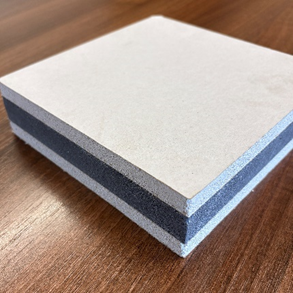
The newest addition includes our Type-4 panel which combines powder-coated aluminium faces with a thicker Nexus stonewool lamella core set in a welded and dressed aluminium tray. This is specifically developed for applications demanding increased u-values. These panels address the growing demand for non-combustible materials in external façades.
Beyond compliance, the FR-A range offers exceptional aesthetic versatility, available in multiple colours and finishes, along with excellent acoustic and thermal performance. Panels can be supplied in custom sizes and shapes, with optional technical support for U-value, acoustic and wind loading calculations.
FR-A type 2 and 3 panels
The FR-A Type 2 panels feature a powder coated or anodised aluminium face with a robust core of Stonewool Lamella. This range also includes Anolok™ Bronze and Anolok™ II Grey finishes, distinctive, and known for their timeless appeal.
FR-A type 4 panels
The FR-A Type 4 panel incorporates a top-hat tray to the rear, a design that allows for increased insulation depth without altering the visible edge profile. This enables the panel to achieve enhanced U-values while maintaining full compatibility with standard glazing systems.
FR-A panels are available with powder-coated (PPC) or anodised aluminium facings and in a range of thicknesses. Each panel undergoes a controlled ISO 9001:2015 certified manufacturing process, including rigorous quality checks to ensure compliance with EN 13501-1:2018 standards.
The difference between powder coating and anodised aluminium finishes
Both powder coating and anodising are finishing processes used to enhance the appearance and performance of aluminium FR-A panels.
In powder coating a dry and electrostatically charged powder is sprayed onto the aluminium surface, which is then cured under heat to form a protective and decorative layer. This process provides a uniform layer offering an extensive range of colours, textures and gloss levels.
Anodising, on the other hand, is an electrochemical process that thickens the natural oxide layer on the aluminium surface. It doesn’t apply a coating but transforms the surface itself, enhancing corrosion resistance and giving a metallic sheen that can be dyed in various tones, significantly improving its performance for various applications.
Benefits of anodised aluminium FR-A panels
Anodised aluminium FR-A panels are highly valued for their premium finish, outstanding durability, superior corrosion resistance and natural metallic aesthetic. During the anodising process, a dense oxide layer forms on the surface of the aluminium, effectively becoming an integral part of the metal itself. This layer acts as a strong barrier against environmental elements, such as moisture, UV radiation and air pollutants, significantly reducing the risk of corrosion over time.
The anodised layer is exceptionally hard and wear-resistant, making FR-A panels highly resistant to scratches, abrasion and everyday wear, which helps extend their service life and maintain a flawless appearance.
Unlike painted finishes, anodised colours are stable and fade-resistant, ensuring a consistent and long-lasting look. The metallic sheen also reflects light, delivering a timeless and architectural aesthetic that is particularly favoured in high-end commercial projects.
When to use anodised or powder coated FR-A panels
Choosing between anodised and powder coated FR-A panels depends on the specific requirements and priorities of your project, including environmental conditions, durability, flexibility and budget.
Anodised FR-A panels are particularly well suited to projects where the building will face challenging weather conditions or where maintaining a metallic appearance is important. They are the preferred choice for projects that demand exceptional durability and corrosion resistance. This finish is often chosen for landmark developments and buildings designed to premium and high quality.
Powder coated FR-A panels are ideal when the specifier requires a wide selection of colours and finishes, making it easy to achieve a specific design vision or align with branding requirements.
While they still offer strong weather resistance and durability, their main appeal lies in the freedom to customise the façade without significantly increasing costs. Powder coated panels are therefore well suited to projects such as schools, residential complexes and commercial spaces.
For more information on our FR-A panels, contact us today on 0114 275 2881 or email sales@panelsystems.co.uk.