
Aluminium Honeycomb Panels: a New Generation of Advanced Materials for Transport and Industry
Panel Systems are proud suppliers of Larcore aluminium honeycomb panels, produced by Alucoil. Panels are supplied from stock at our factory in Sheffield and can be delivered throughout the UK and beyond.
Through a proprietary continuous manufacturing process, Alucoil produces its structural aluminium honeycomb panel Larcore to suit numerous applications including transport, industrial, marine, ships, trains, elevators, buses and aircraft.

What are Larcore Aluminium Honeycomb Panels?
Larcore panels are an extremely lightweight and rigid product that are durable and recyclable. After an intensive R&D effort, Alucoil has managed to combine the natural qualities of the honeycomb structure with its industrial experience in the manufacturing of structural metal panels, obtaining a final product capable of offering complete solutions for diverse project requirements.
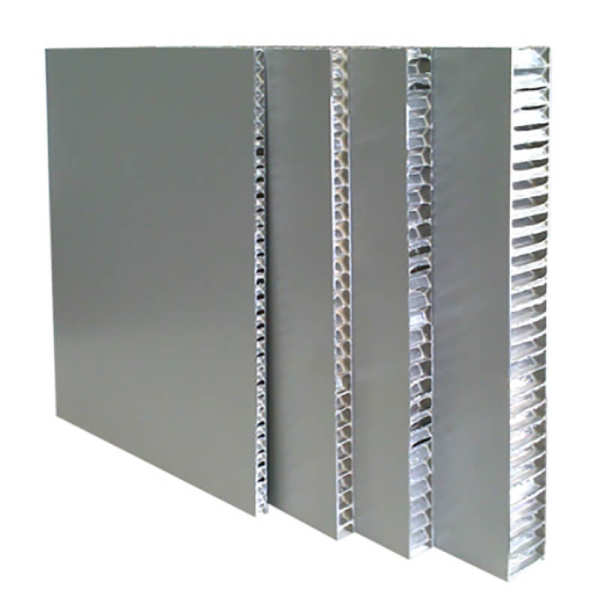
Larcore is a panel formed by two aluminium skins bonded to an aluminium honeycomb core, forming a final structure with ideal properties for transport and industry applications. It is made of aluminium, a fully recyclable metal. The continuous production process allows the achievement of large panel dimensions with stable and uniform values of adherence, flatness and resistance, which are essential properties when using Larcore panels in a variety of applications.
Larcore panels are manufactured from a 3/8” (9,52mm) / 70μ aluminium honeycomb faced on each side with 1mm primed aluminium. All panels are supplied with a removable protective film on the external face. Note: 6 & 10mm panels have a 0.5mm internal face.
For more information regarding Larcore, Contact Panel Systems’ Architectural and Composite Panel division on 0114 249 5635. Alternatively, submit your enquiry to sales@panelsystems.co.uk.
How is the Aluminium Honeycomb Core Structured and Why Is Its Design Beneficial?
The aluminium honeycomb core is the central part of an aluminium honeycomb panel, providing a combination of light weight and high performance. It is manufactured from thin aluminium foil that is bonded together and expanded to form a regular hexagonal cell structure. Once expanded, the core is cut to the required thickness and bonded between two face sheets, typically aluminium, to create a rigid sandwich panel.
The hexagonal cell geometry is highly efficient, offering excellent mechanical performance while using minimal material. Cell size, foil thickness, and core height can be precisely controlled, allowing our team to tailor strength, stiffness, weight, and functional properties to specific transport or industrial requirements.
This cellular structure delivers an exceptional strength-to-weight ratio. Loads applied to the panel are distributed evenly across the network of cell walls, resulting in high compressive and shear strength without the mass of a solid core. When bonded to face sheets, the honeycomb core increases the distance between the skins, significantly improving bending stiffness and resistance to deformation.
Aluminium honeycomb cores also perform well under impact. The cells deform in a controlled manner, absorbing energy and reducing damage to surrounding structures. This makes them well suited to applications where impact resistance, vibration control, or crash performance are important considerations.
The honeycomb design contributes to excellent dimensional stability and flatness, even over large panel areas. The enclosed air within the cells can enhance thermal and acoustic performance, while aluminium’s non-combustible nature supports compliance with strict fire and smoke regulations.
The aluminium honeycomb core is a highly adaptable and efficient structural solution. Its carefully engineered design allows advanced systems to meet demanding performance, safety, and durability requirements across a wide range of transport and industrial applications.
Want to find out more? Browse our honeycomb products here.
What are the Main Applications of Aluminium Honeycomb Panels in Transport and Industry?
Transport Applications
In transport, weight reduction is a critical factor in improving energy efficiency and payload capacity. Aluminium honeycomb panels offer high strength with minimal mass, making them ideal for both structural and interior components.
Common transport applications include:
- Rail vehicles: interior wall panels, ceilings, floors, doors, partitions, luggage racks, and equipment housings, where fire safety, flatness, and long-term durability are essential.
- Commercial vehicles: floors, body panels, load decks, ramps, and interior linings, helping to reduce vehicle weight while maintaining structural integrity.
- Marine: bulkheads, decks, furniture, and interior fit-outs, benefiting from corrosion resistance and high stiffness.
- Aerospace: cabin interiors, flooring systems, galleys, and monuments, where exceptional strength-to-weight performance is critical.
Industrial Applications
In industrial environments, aluminium honeycomb panels are valued for their rigidity and ability to span large areas without distortion.
Typical industrial uses include:
- Machine enclosures and guarding: lightweight yet rigid panels that provide protection, noise reduction, and a high-quality finish.
- Cleanrooms and laboratories: wall and ceiling systems requiring flat, easy-to-clean surfaces.
- Architectural and industrial interiors: partitions, doors, raised floors, and ceiling panels, particularly where fire performance and durability are required.
- Energy and infrastructure: cladding, access panels, and housings for equipment exposed to demanding conditions.
A Cross-Sector Solution
Across both transport and industry, aluminium honeycomb panels support:
- Weight reduction and improved efficiency
- High stiffness and long-span capability
- Compliance with fire, smoke, and safety standards
- Long service life with low maintenance requirements
These qualities make aluminium honeycomb panels a core material for advanced panel systems in modern transport and industrial applications.
What are the Advantages of Using Aluminium Honeycomb Panels Over Traditional Solid Panels?
There are various superior advantages to aluminium honeycomb panels when compared to regular solid panels. These advantages include:
- Extremely Lightweight: the hexagonal core of aluminium honeycomb panels provides elite strength whilst using minimal material. This allows for larger and lighter panels that are much easier to install than their solid panel counterparts.
- Better Structural Stability: unlike traditional panels, aluminium honeycomb panels don’t warp under pressure, making them the ideal choice for demanding structures
- Better Strength-to-Weight Ratio: although they are the lighter option, they offer better durability and resilience, resisting deformities and bending better than solid panel options
- More Functional: the core structure provides better noise reduction and has energy-saving properties
- Versatility: aluminium honeycomb panels can be large or small, and can even be cut into custom shapes, suitable for modern building cladding and interior designs.
Our aluminium honeycomb cores (Thermhex) and panels are lightweight and rigid, perfect for marine, aviation and other harsh environments. Contact our sales office here to find out more.
Frequently Asked Questions
What Are Aluminium Honeycomb Panels, and What Makes Them Different From Other Panels Options?
Aluminium honeycomb panels are lightweight structural panels made from two thin aluminium sheets bonded to a honeycomb-shaped core. This honeycomb structure creates a panel that is extremely strong and lightweight compared to solid metal sheets or traditional composite boards.
The honeycomb core spreads weight and impact across the panel, meaning you get high stiffness without the bulk. They’re also corrosion-resistant, so they don’t warp or twist easily.
Compared with solid aluminium, plywood, MDF or foam-core panels, aluminium honeycomb panels are:
- Much lighter
- More rigid
- Better at handling impacts and compression
- Less prone to moisture damage
This makes them a popular choice for industries where strength, weight and durability all matter, such as construction, transport and marine applications.
What Thickness Options are Available for Aluminium Honeycomb Panels, and How Do They Affect Performance?
Aluminium honeycomb panels are available in a wide range of measurements, ranging from 6mm to over 50mm.
- Thinner panels (6-15mm) are the most lightweight option and are suited to interior use, such as cladding, ceilings and furniture displays.
- Mid-thickness panels (20-40mm) combine rigidity and weight, making them the perfect choice for partitions, transport applications and architectural features.
- Thicker panels (40mm+) provide the maximum stiffness needed for load-bearing structures, flooring and other areas that require extra resistance to impact.
At Panel Systems, we offer honeycomb panels that range from 6mm to 40mm.
Can Aluminium Panels Be Customised in Size and Specification for Specific Projects?
Aluminium honeycomb panels are highly customisable and can be tailored to:
- Panels size
- Skin thickness
- Core density and cell size
- Surface finishes (powder coating, anodised, etc.)
- Edge details
What Typical Panel Sizes are Available for Aluminium Honeycomb Panels
At Panel Systems, our aluminium honeycomb panel sizes are 3120x1500mm, 1500x1000mm and 600x600mm.
What Industries Commonly Use Aluminium Honeycomb Panels and Why?
Honeycomb panels are suited to a range of industries, especially those that need high strength and low weight. Sectors that we supply to include:
- Construction/architecture
- Transport, such as rail, aviation and buses
- Marine
- Industrial, such as work surfaces and machine enclosures
- Signage and displays
Are There Specific Products, Brand or Models of Aluminium Honeycomb Panels Recommended for Marine Applications?
Yes, and it is important to look for aluminium honeycomb panels that meet marine-grade standards; these include corrosion-resistant alloys and approved adhesives.
Contact us
Get in touch to find out more about pricing, or to discuss your requirements in more detail.
Please note: We specialise in supplying commercial manufacturers and trade customers. Unfortunately, we are unable to quote for most individual self-build camper van or motorhome projects.
Call us on 0114 249 5626